Who we are, Fair Trade Association
It started in 2015 during a UNO symposium Geneva. Some visitors from the Netherlands, Bulgaria and Switzerland found each other as a small interest group of people with the same thoughts about world trade. The most important thought was, NO AID, BUT TRADE.
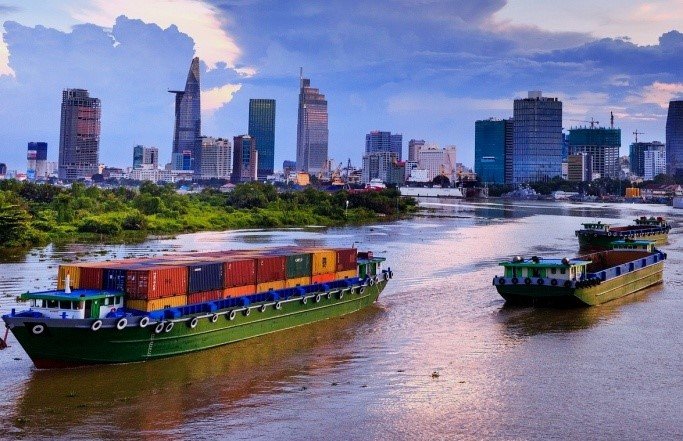
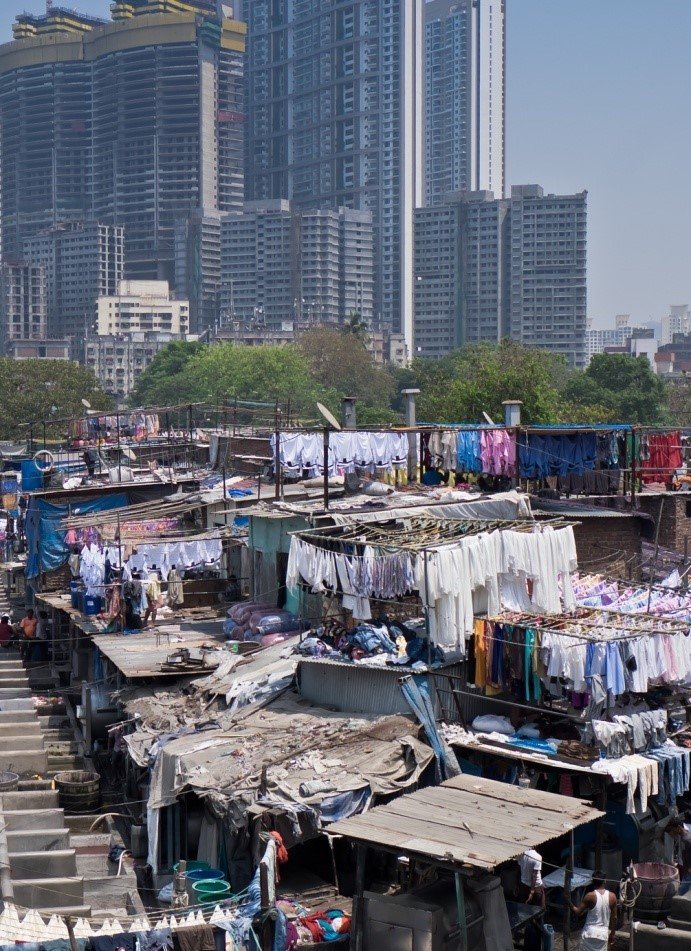
Why “NO AID, BUT TRADE”.
They met twice a year, alternately in NL, CH and BG and remained in close contact. This collaboration led to a few aid projects. As these projects expanded and the demand for more arose, this could no longer be achieved without further support. It was decided to make the Association.nization less voluntary and to set up a permanent point of contact, whereby BG was chosen for practical reasons and as it is a full member of the E.U. In 2019 Fair-Trade Association was officially established as an association in Plovdiv, Bulgaria. With the main objective of creating structures that should enable people worldwide to optimally participate in the economy. Fair-Trade Association. is firmly convinced that this objective is for many underproviliged worldwide the most honest and decent way to get out of the poverty spiral.
What does Fair-Trade Association.
Fair Trade Association. first of all wants to promote awareness of structural problems and inequalities in trade relations between the continents Africa, South East Asia and Latin America with the E.U. Australia and Northern America in particular.


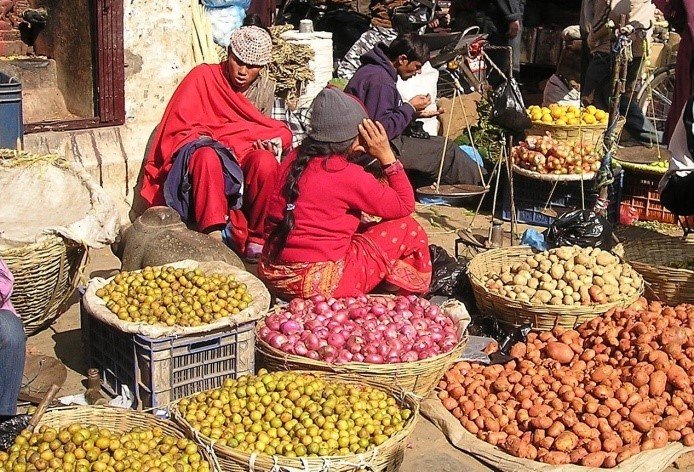
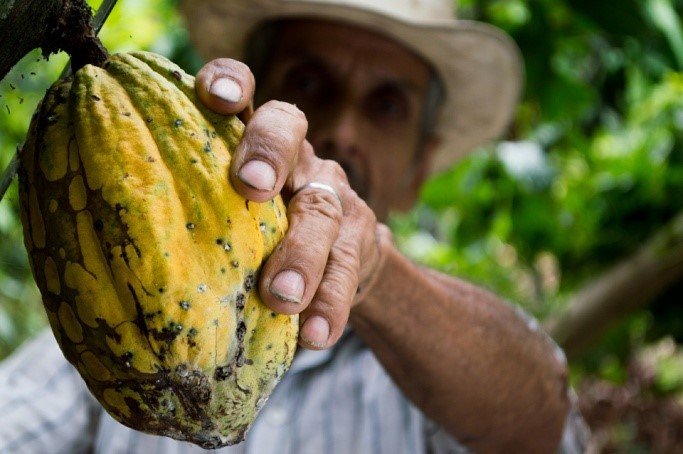
In addition, FTA support developing tools for the people in the previously named areas, to generate opportunities to participate in business at eye level with the E.U. and other high developed countries. Initiating discussion to break down barriers to enable access. Main barriers for direct access is the language diversity, which makes it more difficult to gain contacts, operate on platforms from western markets, FTA supports simplifying and translating regulations into local languages . First steps have been taken promoting local forms of cooperation, information, transfer of knowledge and support to establish small companies and startups.
How Fair-Trade Association.
With the growth of Fair-Trade Association., the costs of FTA have also increased. Nevertheless, apart from the contributions, FTA highly depends on donations and sponsors. Board and members are voluntary involved and by running the orgnization from Plovdiv, Bulgaria, FTA can finance itself.
Fair-Trade Association.s objective for trends.
For FTA it has always been the most important to get noticed new economic developments and trends by allowing a broad audience to discuss. Allowing to use the FTA blog as an open source blog, combined with the FTA forum, FTA wants to generate a large participation and attentiveness. Introducing actual and future themes from all perspectives, in line with the goals for which FTA stands for, might ensure FTA blogs a great attention.
Fair-Trade Association.s think tank
The blogs, with multifaceted, and hopefully in-depth comments. can inform public opinion profoundly and to the benefit of politicians and businessmen ultimately be a usefull think tank. The FTA forum, which encourages discussions on more practical and understandable topics, should be accessible to the general public.
Fair-Trade Association.s agenda.
For information purposes, FTA will also have an agenda on the website, on which all coming important and relevant events are announced. These events can of course be discussed and / or commented on in the blog or forum. wire:

Fair-Trade Association.s future.
The last decades have taught us how some countries have reached the top of the emerging
markets. It showed that mostly needed was; good governance with a clear long-term vision
for the future. But in a time of trade restrictions, sanctions, new crisis areas and refugee
flows, it is a balance-act, almost impossible for governments with limited resources to make
the right choice of broadly supported solutions, considering short time effects for the population
and longtime for the country’s future.
In addition, FTA is developing tools for people, companies and organizations in the affected areas the
opportunity to contact in a simpler and less formal way counterparts and eaquals in the E.U. and other
high developed countries. Contact at eye level without barriers should make it possible to bring issues
to attention and find common solutions to them. Eye level without middlemen or other barriers. A barrier
for direct access is often the language, so to ease access, FTA helps by simplifying and translating
regulations into local languages. Steps have been taken with the promotion of all possible ways of
collaboration and support ; information, transfer of knowledge, internships or even adoption of small companies.
In addition, FTA is developing tools to offer people in the aforementioned areas the opportunity to enter into business contacts quickly with the E.U. and other high developed countries, all at eye level without middlemen or other barriers. A main barrier for direct access is language, so to provide access to the western markets, FTA helps by simplifying and translating regulations into local languages . The first steps have already been taken with the promotion of local forms of cooperation, information, transfer of knowledge and support with establishing small private companies.

Fair-Trade Association. for a sustainable future.
FTA endorses the current climate conventions and has implemented them as one of the guidelines in its policy.
Fair Trade Association. about financing
It may be clear global trade has to do with huge capital flows. Especially IMF makes every effort to integrate the targeted areas into global trade.

Fair Trade Association. working conditions.
Fair trade also means working, or having produced, under fair working conditions. FTA points out to Western countries the importance of fair trade with fair working conditions in the targeted areas, because it ultimately works in two directions. Rising living standards in the targeted countries create more potential, through the emergence of new consumers who will later be important for both sides.
What Fair-Trade Association. will not.
FTA as a neutral institution will always refrain from politically colored comments and judgements. FTA is for dialogue and cooperation. If requested, FTA will be happy to consult interested arganizations, to inform, to provide and participate in programs. FTA will not take sides, nor mediate or represent.


What WFTA says about fair trade?
Trade is a trading partnership, based on dialogue, transparency and respect.
"Fair Trade is a trading partnership, based on dialogue, transparency and respect, that seeks greater equity in international trade. It contributes to sustainable development by offering better trading conditions to, and securing the rights of, marginalized producers and workers – especially in the South
Fair Trade Association.nisations have a clear commitment to Fair Trade as the principal core of their mission. They, backed by consumers, are engaged actively in supporting producers, awareness raising and in campaigning for changes in the rules and practice of conventional international trade." They can be recognised by the WFTA logo
Fair Trade is more than just trading:
• It proves that greater justice in world trade is possible.
• It highlights the need for change in the rules and practice of
• conventional trade and shows how a successful business can also put people first.
• It is a tangible contribution to the fight against poverty, climate change and economic crisis
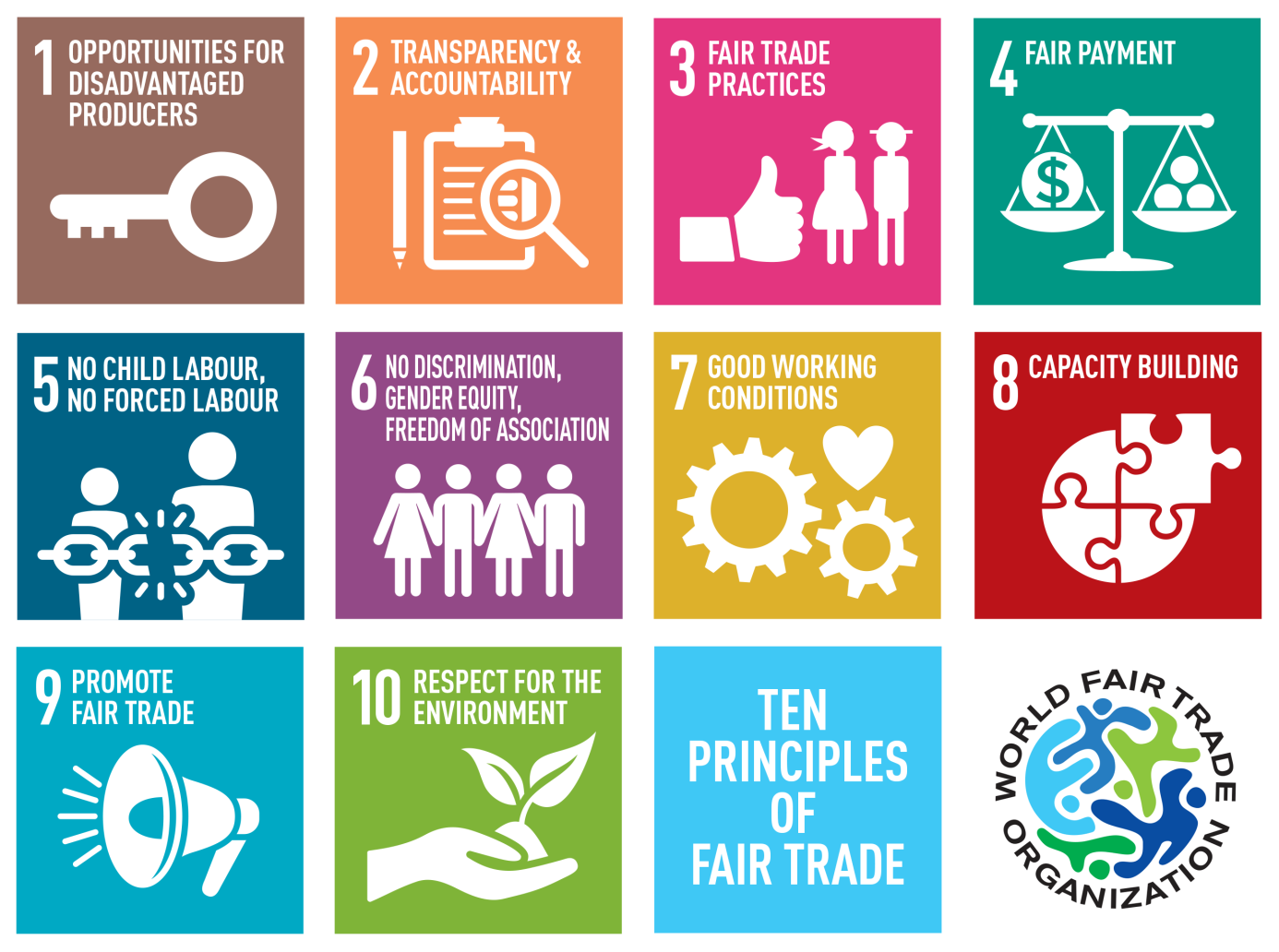
WFTA prescribes 10 Principles that Fair Trade Association.nisations must follow in their day-to-day work and carries out monitoring to ensure these principles are upheld
Principle One: Creating Opportunities for Economically Disadvantaged Producers
Poverty reduction through trade forms a key part of the Association.nisation's aims. The Association.nisation supports marginalised small producers, whether these are independent family businesses, or grouped in associations or co-operatives. It seeks to enable them to move from income insecurity and poverty to economic self-sufficiency and ownership. The Association.nisation has a plan of action to carry this out.
Principle Two: Transparency and Accountability.
The Association.nisation is transparent in its management and commercial relations. It is accountable to all its stakeholders and respects the sensitivity and confidentiality of commercial information supplied. The Association.nisation finds appropriate, participatory ways to involve employees, members and producers in its decision-making processes. It ensures that relevant information is provided to all its trading partners. The communication channels are good and open at all levels of the supply chain.
Principle Three: Fair Trading Practice.
The Association.nisation trades with concern for the social, economic and environmental well-being of marginalised small producers and does not maximise profit at their expense. It is responsible and professional in meeting its commitments in a timely manner. Suppliers respect contracts and deliver products on time and to the desired quality and specifications. Fair Trade buyers, recognising the financial disadvantages producers and suppliers face, ensure orders are paid on receipt of documents and according to the attached guidelines. For Handicraft Fair Trade products, an interest free pre-payment of at least 50 % is made on request. For Food Fair Trade products, pre-payment of at least 50% at a reasonable interest is made if requested. Interest rates that the suppliers pay must not be higher than the buyers’ cost of borrowing from third parties. Charging interest is not required. Where southern Fair Trade suppliers receive a pre payment from buyers, they ensure that this payment is passed on to the producers or farmers who make or grow their Fair Trade products. Buyers consult with suppliers before canceling or rejecting orders. Where orders are cancelled through no fault of producers or suppliers, adequate compensation is guaranteed for work already done. Suppliers and producers consult with buyers if there is a problem with delivery, and ensure compensation is provided when delivered quantities and qualities do not match those invoiced. The Association.nisation maintains long term relationships based on solidarity, trust and mutual respect that contribute to the promotion and growth of Fair Trade. It maintains effective communication with its trading partners. Parties involved in a trading relationship seek to increase the volume of the trade between them and the value and diversity of their product offer as a means of growing Fair Trade for the producers in order to increase their incomes. The Association.nisation works cooperatively with the other Fair Trade Association.nisations in country and avoids unfair competition. It avoids duplicating the designs of patterns of other Association.nisations without permission. Fair Trade recognises, promotes and protects the cultural identity and traditional skills of small producers as reflected in their craft designs, food products and other related services.
Principle Four: Payment of a Fair Price.
A fair price is one that has been mutually agreed by all through dialogue and participation, which provides fair pay to the producers and can also be sustained by the market. Where Fair Trade pricing structures exist, these are used as a minimum. Fair pay means provision of socially acceptable remuneration (in the local context) considered by producers themselves to be fair and which takes into account the principle of equal pay for equal work by women and men. Fair Trade marketing and importing Association.nisations support capacity building as required to producers, to enable them to set a fair price.
Principle Five: Ensuring no Child Labour and Forced Labour
The Association.nisation adheres to the UN Convention on the Rights of the Child, and national / local law on the employment of children. The Association.nisation ensures that there is no forced labour in its workforce and / or members or homeworkers. Association.nisations who buy Fair Trade products from producer groups either directly or through intermediaries ensure that no forced labour is used in production and the producer complies with the UN Convention on the Rights of the Child, and national / local law on the employment of children. Any involvement of children in the production of Fair Trade products (including learning a traditional art or craft) is always disclosed and monitored and does not adversely affect the children's well-being, security, educational requirements and need for play.
Principle Six: Commitment to Non Discrimination, Gender Equity and Women’s Economic Empowerment, and Freedom of Association.
The Association.nisation does not discriminate in hiring, remuneration, access to training, promotion, termination or retirement based on race, caste, national origin, religion, disability, gender, sexual orientation, union membership, political affiliation, HIV/Aids status or age. The Association.nisation has a clear policy and plan to promote gender equality that ensures that women as well as men have the ability to gain access to the resources that they need to be productive and also the ability to influence the wider policy, regulatory, and institutional environment that shapes their livelihoods and lives. Association.nisational constitutions and by-laws allow for and enable women to become active members of the Association.nisation in their own right (where it is a membership based Association.nisation), and to take up leadership positions in the governance structure regardless of women’s status in relation to ownership of assets such as land and property. Where women are employed within the Association.nisation, even where it is an informal employment situation, they receive equal pay for equal work. The Association.nisation recognises women’s full employment rights and is committed to ensuring that women receive their full statutory employment benefits. The Association.nisation takes into account the special health and safety needs of pregnant women and breast-feeding mothers. The Association.nisation respects the right of all employees to form and join trade unions of their choice and to bargain collectively. Where the right to join trade unions and bargain collectively are restricted by law and/or political environment, the Association.nisation will enable means of independent and free association and bargaining for employees. The Association.nisation ensures that representatives of employees are not subject to discrimination in the workplace.
Principle Seven: Ensuring Good Working Conditions.
The Association.nisation provides a safe and healthy working environment for employees and / or members. It complies, at a minimum, with national and local laws and ILO conventions on health and safety. Working hours and conditions for employees and / or members (and any homeworkers) comply with conditions established by national and local laws and ILO conventions. Fair Trade Association.nisations are aware of the health and safety conditions in the producer groups they buy from. They seek, on an ongoing basis, to raise awareness of health and safety issues and improve health and safety practices in producer groups
Principle Eight: Providing Capacity Building.
The Association.nisation seeks to increase positive developmental impacts for small, marginalised producers through Fair Trade. The Association.nisation develops the skills and capabilities of its own employees or members. Association.nisations working directly with small producers develop specific activities to help these producers improve their management skills, production capabilities and access to markets - local / regional / international / Fair Trade and mainstream as appropriate. Association.nisations which buy Fair Trade products through Fair Trade intermediaries in the South assist these Association.nisations to develop their capacity to support the marginalised producer groups that they work with.
Principle Nine: Promoting Fair Trade.
The Association.nisation raises awareness of the aim of Fair Trade and of the need for greater justice in world trade through Fair Trade. It advocates for the objectives and activities of Fair Trade according to the scope of the Association.nisation. The Association.nisation provides its customers with information about itself, the products it markets, and the producer Association.nisations or members that make or harvest the products. Honest advertising and marketing techniques are always used.
Principle Ten: Respect for the Environment.
Association.nisations which produce Fair Trade products maximise the use of raw materials from sustainably managed sources in their ranges, buying locally when possible. They use production technologies that seek to reduce energy consumption and where possible use renewable energy technologies that minimise greenhouse gas emissions. They seek to minimise the impact of their waste stream on the environment. Fair Trade agricultural commodity producers minimise their environmental impacts, by using Association.nic or low pesticide use production methods wherever possible. Buyers and importers of Fair Trade products give priority to buying products made from raw materials that originate from sustainably managed sources, and have the least overall impact on the environment. All Association.nisations use recycled or easily biodegradable materials for packing to the extent possible, and goods are dispatched by sea wherever possible.